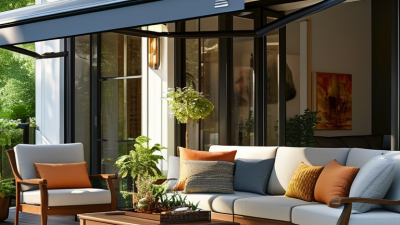
A Folding Awning is a really handy way to turn those empty storefront edges into a functional space for customers. Imagine, two shaded tables, a clear path for entry, and rainwater kept away from the door—that kind of setup just makes the spot more inviting. For cafés, salons, hotels, and shops, adding this extra space isn’t just about looks; it can actually boost visibility without the hassle or cost of building new structures. Plus, it gives folks a cozy little pause before they step inside.
According to the U.S. Department of Energy, exterior awnings can cut down solar heat gain by as much as 65% on south-facing windows and even 77% on west-facing ones. But, of course, those aren’t hard-and-fast numbers that'll apply to every place. Things like your building’s orientation, the fabric you choose, the type of windows, and even local weather all play a part. Still, the data definitely suggests that movable shades are a smart part of an overall energy-saving game plan.
The Freedonia Group’s research on commercial awnings also points out that demand is driven by renovations, the hospitality industry, and efforts to make Outdoor Areas more usable. That’s exactly what a Folding Awning is all about—you can extend it during business hours for shade and retract it when the weather turns or you’re closing up shop.
And it’s not just about looks. A good, sturdy system can protect your Outdoor Furniture, cut down on glare, and make seasonal seating way easier to manage. But don’t just pick one based on how it looks in pictures—installation quality really matters. Things like wind ratings, drainage, fabric durability, and how easy it is to get maintenance done are just as important. Before you buy, it’s a good idea to have a quick site assessment—checking out your wall structure, the sun’s path throughout the day, where customers typically walk, and how exposed your spot really is. Skipping this step might save time now, but it can end up costing you a lot later on. With advice from trained installers and products from reputable manufacturers, a Folding Awning is more than just a pretty accessory—it’s a smart investment that can actually make a difference in how your space functions.
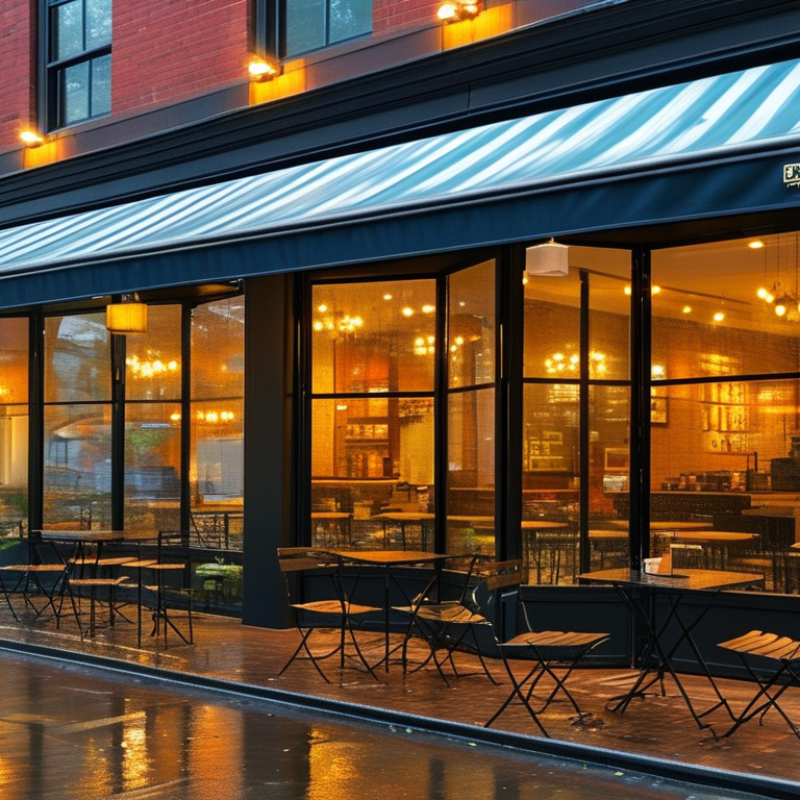
A Folding Arm Awning is a retractable shade system fixed above a shopfront, café window, or outdoor seating area. Its fabric cover extends through two hinged arms, then rolls back around a tube when protection is no longer needed. A wall bracket supports the cassette, while a manual crank or motor controls movement. When fully open, the arms hold the fabric under steady tension. Small details matter, including mounting height, wall strength, drainage, and the awning’s projection.
The U.S. Department of Energy’s Energy Saver guidance reports that window awnings can reduce solar heat gain by up to 65% on south-facing windows and 77% on west-facing windows. That reduction may lower cooling demand, although results depend on glass type, local climate, and operating habits. A business may notice a cooler display area, less glare on menus, and more comfortable outdoor seats. It is not magic.
A Folding Arm Awning also gives staff flexible control. They can extend it during bright afternoon service and retract it before strong winds arrive. Wind sensors can help, but they should not replace regular inspection. The fabric needs cleaning, the joints need checking, and the fixing points deserve attention after severe weather. A common mistake is choosing the widest projection without studying nearby doors, signs, or drainage. The best installation is not always the largest one.
For a café, salon, or small shop, outdoor space can become useful selling space. A Retractable Folding Arm Awning creates shade without permanent structural changes. Customers can wait more comfortably, browse longer, and enjoy seats near the entrance. That comfort may support repeat visits, especially during bright afternoons or light rain. It also gives staff a clearer boundary between indoor service areas and outdoor seating.
Businesses can adjust the cover as conditions change. Open it for morning sun, then retract it before strong winds arrive. This flexibility protects the fabric and keeps the frontage looking cared for. A measured installation can reduce glare through front windows and help limit indoor heat. Lower cooling demand may reduce operating costs, although results depend on building orientation and local weather. Those details matter. A qualified installer should check wall strength, drainage, fabric rating, and operating clearance.
The awning can strengthen visual presence without blocking signs or narrow walkways. Choose a restrained color and readable edge profile. Do not treat it as a miracle. Poor measurements can obstruct doors, collect water, or create awkward customer movement. Regular cleaning and inspections help reveal loose fixings, fading, or damaged joints early. Owners should follow operating and wind guidance instead of guessing from appearance. The ideal setup is rarely perfect, so reviewing customer flow after installation can reveal small problems worth correcting.
A Folding Awning Canopy can make a business entrance feel cooler, calmer, and easier to notice. The U.S. Department of Energy reports that window awnings can reduce solar heat gain by up to 65% on south-facing windows and 77% on west-facing windows. That difference matters when customers wait beside a sunlit storefront. A shaded doorway, dry seating area, and cooler display window create a more comfortable first impression. Shade matters.
Visibility improves when the canopy frames the entrance without blocking it. The U.S. Sign Council Foundation found that 67% of consumers view on-premise signs as an indicator of business quality. A clean, contrasting canopy edge can support that visual cue from the sidewalk. It may also define outdoor seating and help pedestrians identify the entrance before they reach it. Small details count.
The result is not automatic. A low canopy can hide lettering, dark fabric can reduce contrast, and poor placement can narrow the walking path. Measure sightlines from the street, curb, and nearby parking area. Test the canopy at different times, especially during afternoon glare. This step is easy to overlook. Comfort and visibility must work together, not compete.
| Business Factor | How a Folding Awning Helps | Practical Data | Customer and Business Benefit | Planning Consideration |
|---|---|---|---|---|
| Outdoor Shade Coverage | Retractable projection creates a shaded zone beside the storefront, entrance, or outdoor seating area. | 1.5–4.0 m projection Typical commercial planning range | More usable space can be provided without constructing a permanent roof or enclosure. | Confirm the available mounting height, wall strength, clearance, and local setback requirements. |
| Solar Heat Control | Reduces direct solar radiation reaching windows, doors, walls, and outdoor customer areas. | Up to 77% less solar heat gain For exterior shading compared with unshaded windows, depending on orientation and fabric | Cooler seating and entrance areas can improve comfort and may reduce cooling demand near glazed façades. | Performance depends on fabric openness, color, window type, orientation, and the angle of the sun. |
| Customer Thermal Comfort | Provides shade from direct sunlight while allowing natural air movement because the sides remain open. | Open-sided design No mechanical ventilation required for the shaded area | Customers can wait, dine, or browse outdoors with less glare and radiant heat exposure. | Use weather-resistant fabric and consider wind sensors or manual retraction during severe weather. |
| Glare Reduction | Blocks high-angle sunlight from entering windows and shining directly into customers’ eyes or staff work areas. | Exterior shading is highly effective It stops sunlight before it passes through the glass | Improves visual comfort for retail displays, café seating, reception desks, and waiting areas. | Select a projection and valance height that shade the required viewing area without blocking displays. |
| Storefront Visibility | Can define the entrance and create a clear overhead frame while remaining retractable when an unobstructed façade is preferred. | Flexible operating position Extended for identification; retracted for a clear façade | Helps customers recognize the entrance and can make the business appear more welcoming from the pavement. | Keep signs, lighting, door swings, and fire exits visible and unobstructed at all times. |
| Brand and Wayfinding Area | A front valance or coordinated fabric can provide a visible architectural element above the entrance. | Optional straight or scalloped valance Suitable for simple location or directional graphics | Improves storefront coherence and helps pedestrians identify the customer entrance. | Check local sign regulations, contrast, legibility, and viewing distance before adding graphics. |
| Weather Flexibility | Retracts when strong wind, heavy rain, snow, or severe weather could damage the structure or fabric. | Retractable protection Use according to the manufacturer’s wind and weather limits | Offers seasonal flexibility without committing the business to a permanently exposed canopy. | Do not treat a standard folding awning as a storm shelter or a substitute for a fully engineered weather enclosure. |
| Energy-Saving Potential | External shading can reduce unwanted solar gains before heat enters the building through windows. | Orientation-sensitive Most useful on façades receiving strong direct sun | May support lower air-conditioning loads and reduce indoor temperature fluctuations near windows. | Actual savings require a building-specific assessment of glazing, HVAC operation, climate, and occupancy. |
| Space Efficiency | Folds or rolls close to the wall when shade is not required. | Retracted depth commonly 0.2–0.4 m Varies by model and projection | Preserves pavement clearance and maintains a cleaner façade outside operating hours. | Allow additional room for brackets, motor housings, drainage, and maintenance access. |
| Accessibility and Circulation | Can shade an entrance while maintaining a clear route when correctly positioned and installed. | Maintain at least 2.0 m clear headroom Confirm applicable local accessibility rules | Supports safer movement for pedestrians, wheelchair users, delivery staff, and customers carrying bags. | Verify local requirements for minimum clear width, headroom, projections, and detectable obstructions. |
| Installation Disruption | Usually requires less structural work than building a permanent canopy or enclosed extension. | Wall-mounted system Installation duration varies with site conditions | Can add customer comfort and visual interest while limiting disruption to daily operations. | Obtain a structural review where masonry, insulation, cladding, or older façades are involved. |
| Maintenance and Service Life | Removable or replaceable fabric and accessible mechanical components simplify routine care. | Regular cleaning and inspection recommended Inspect fabric, arms, fixings, and drainage paths | Routine maintenance helps preserve appearance, smooth operation, and long-term performance. | Follow the fabric and frame manufacturer’s cleaning instructions; avoid retracting wet fabric unless designed for it. |
Note: The figures shown are practical planning values or commonly cited performance ranges, not guaranteed results. Final performance depends on the awning size, fabric, orientation, local climate, installation quality, building construction, and operating conditions.
Reference basis: U.S. Department of Energy, “Energy Saver: Window Attachments”; U.S. Department of Energy, “Efficient Window Coverings”; International Building Code accessibility and projection provisions; manufacturer-independent commercial awning design and installation practice.
Commercial awnings must handle repeated opening, changing weather, and daily customer traffic. Material selection affects service life, appearance, and maintenance costs.
Powder-coated aluminum frames resist corrosion and stay relatively light. Their clean structure suits cafés, storefronts, and outdoor service counters. For the canopy, solution-dyed acrylic fabric offers strong color retention and useful resistance to sunlight. PVC-coated polyester provides a smoother, more water-resistant surface for wetter locations. No material is perfect. I have seen small tears begin where fabric rubs against a frame. Regular inspections can catch this early. Check stitching, arm joints, fasteners, and drainage paths.
Design affects both comfort and operation. An Electric Folding Arm Awning can extend shade without floor posts or bulky supports. Independent folding arms help cover wide windows while keeping entrances clear. For narrow façades, a compact projection may look more balanced than a deep canopy. Cassette designs protect rolled fabric from dust when closed. Open-frame designs can offer easier access for maintenance. Keep the slope sufficient for rainwater runoff. Do not rely on appearance alone. Ask for load testing, fabric specifications, and installation guidance suited to the site. A sample section can reveal glare, color, and clearance problems before full installation. That small test matters.
Commercial folding awnings provide flexible shade, weather protection, and adjustable outdoor space. The chart compares typical service-life ranges for commonly used commercial awning materials. Actual performance depends on climate, maintenance, installation quality, and operating frequency.
Material overview: Acrylic fabrics offer strong color retention and breathability, PVC-coated polyester provides high water resistance, polyester is a cost-effective lightweight option, and aluminum systems deliver long-term structural durability. Folding designs allow businesses to extend or retract coverage as customer needs and weather conditions change.
Choosing the right folding awning begins with the daily needs of your business. A café may need shade over outdoor tables, while a shop may need shelter above its entrance. Measure the frontage, projection, and clearance carefully. A small error can block signs, doors, or customer pathways.
Study the building surface before selecting the frame. Brick, concrete, and lightweight panels require different fixing methods. Strong aluminium frames resist corrosion and reduce maintenance. Fabric should handle sunlight, light rain, and repeated opening. In windy areas, a manual model may be safer when staff can close it quickly. Motorized operation saves effort, but it needs reliable controls and professional installation. Ask about drainage, cleaning, and replacement parts before ordering.
Check the awning at different times of day. Morning shade may disappear by lunchtime. Also consider nearby trees, signs, heaters, and delivery vehicles. A qualified installer should explain load limits and local installation requirements clearly. Do not judge quality by appearance alone. Look at stitching, joints, brackets, and the warranty terms. I once focused too heavily on colour and underestimated the projection depth. That mistake reduced useful seating space. A practical choice may look less impressive, but it often works better. Leave room in the budget for maintenance, not only the initial purchase.
A folding awning adds shade and weather protection, but it needs disciplined care. Check the fabric weekly for loose stitching, trapped water, mildew, and bird damage. Examine folding arms, wall brackets, bolts, and drainage edges every month. Small movement can become structural failure.
Safety deserves more attention than appearance. Retract the awning before strong winds, thunderstorms, or heavy snow. Never force a stiff mechanism. Isolate electrical power before inspecting a motorized unit. OSHA’s 2022 construction fatality data recorded 395 fatal falls among 1,069 construction deaths. That figure is not awning-specific, but it shows why height work cannot be treated casually. Use a stable platform, maintain three points of contact, and keep customers away from the work area. A qualified technician should assess cracked brackets or unusual noise.
Tips: Keep a dated inspection log. Clean fabric with mild soap and water, not abrasive tools. Allow it to dry fully before retracting. Do not rely on visual checks alone; feeling looseness in a bracket can reveal trouble earlier. In practice, owners often inspect the fabric and ignore the wall fixings. I have seen that mistake become expensive. Local wind exposure, installation age, and daily opening cycles should shape the maintenance schedule. Manufacturer instructions and relevant workplace-safety guidance should always take priority.
: Powder-coated aluminum frames resist corrosion and remain relatively light. Solution-dyed acrylic fabric keeps color well under sunlight. PVC-coated polyester offers a smoother, more water-resistant surface. No material is perfect.
Measure the frontage, projection, and clearance carefully. Check doors, signs, windows, and customer pathways. A small measurement error can block an entrance. Leave enough space.
Folding arms can shade outdoor tables without floor posts. They also keep entrances and walkways clear. Compact projections suit narrow façades. Deep canopies may reduce usable space.
Manual models can close quickly when staff monitor changing weather. Motorized systems reduce physical effort during daily use. They require reliable controls and professional installation. Convenience still needs maintenance.
Keep the awning slope sufficient for rainwater runoff. Inspect drainage paths for dirt and blockage. Water should not collect in fabric folds. Looks can mislead.
Brick, concrete, and lightweight panels need different fixing methods. The installer should check wall strength and fixing points. Load limits must suit the site. Do not guess.
Check stitching, arm joints, brackets, fasteners, and fabric edges. Look for rubbing points near the frame. Small tears can grow during repeated opening. Inspect regularly.
Request fabric details, load testing, and site-specific installation guidance. A sample section can reveal glare, color, and clearance problems. Test it during morning and lunchtime. Small tests matter.
Budget for cleaning, inspections, controls, fabric repairs, and replacement parts. Ask about maintenance procedures before ordering. Initial price is not the whole cost. I once focused too much on color. Projection depth mattered more.
A Folding Awning is a practical retractable shade system designed to extend from a building and fold away when not needed. For businesses such as cafés, shops, restaurants, and service offices, it can create a more comfortable outdoor area, protect entrances and displays from sunlight and light rain, and improve the visibility of the storefront. By providing shade and reducing glare, a Folding Awning may encourage customers to stay longer while making signs, windows, and product displays easier to notice.
Commercial folding awnings are available in different fabrics, frame materials, colors, sizes, and operating styles, allowing businesses to match their appearance and daily needs. When choosing one, businesses should consider the installation area, weather conditions, available space, coverage requirements, and ease of operation. Regular maintenance is also important: clean the fabric, inspect the frame and fasteners, keep moving parts in good condition, and retract the awning during severe weather. Proper installation, safe operation, and periodic inspections can help maintain reliable performance and extend its service life.