Leave Your Message
0%

Picking out an Adjustable Louvered Roof isn’t just about the pretty pictures — it really starts with understanding how you plan to use the space. For example, a peaceful patio where you sip your morning coffee needs something different from a restaurant terrace bustling with guests every night. Before you dive into product specs, think about things like sunlight, rain, airflow, privacy, and how comfortable you'll be during different seasons. Oh, and don’t forget to measure your space carefully—include walls, drainage spots, nearby doors, all that. Skimping on measurements can lead to costly surprises down the line.

Most experienced installers will want to check out your property first before recommending what roof system works best. They usually look at things like local wind patterns, snow loads, how sturdy your current structure is, and whether they’ll have easy access to electrical connections. Make sure to ask for documented load ratings, details about corrosion-resistant materials, motor specs, and water drainage plans. Aluminum louvers are often a good bet if you’re in a humid area, but extra-coating might be needed if you’re near the coast. And a solid supplier should be transparent about how they test their products and what their warranty covers—don’t just go on pretty pictures! Also, control features matter. Remote controls, rain sensors, even smart-home integration can make your life easier—it’s worth thinking about whether those features are reliable and easy to get parts for down the line.

Who installs your roof and who’ll handle future tweaks? Sometimes that gets overlooked, but it’s super important. Getting a professional opinion from a qualified contractor can really spot issues online shopping can’t. That said, no roof is perfect—no matter how fancy or well-designed, they all need a little TLC now and then, like cleaning, oiling moving parts, or just realigning things. Instead of just chasing the lowest price upfront, think about the total cost of ownership—how durable it is, how it looks over time, safety, and whether you can count on support when you need it. The best choice is one that balances comfort, durability, style, safety, and reliable backup for years to come.
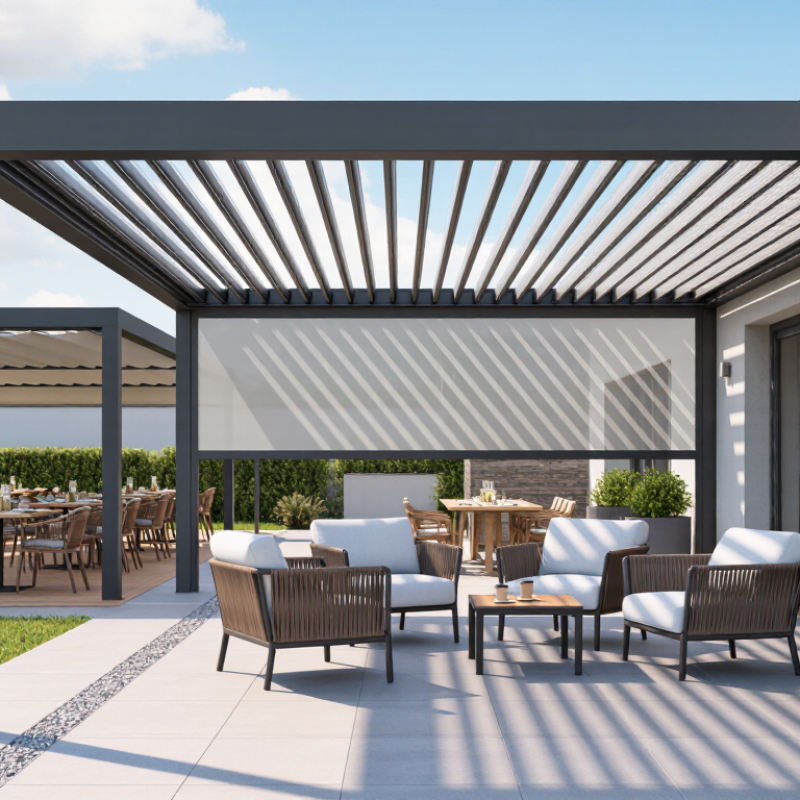
How to Choose an Adjustable Louvered Roof?

Define Your Outdoor Space, Climate, and Louvered Roof Goals

How to Choose an Adjustable Louvered Roof?

Define the outdoor space before comparing materials or controls. A dining terrace needs stable shade, while a poolside area may need quick ventilation. Measure the walking zone, furniture layout, drainage path, and nearby walls. A Pergola Adjustable Louvered Roof should frame the space, not dominate it. Keep enough clearance for doors, lights, and seasonal maintenance.

Climate changes the specification. In hot regions, angled louvers can limit direct summer sun and release trapped heat. In wet climates, inspect gutter capacity, roof pitch, seals, and wind-rated construction.

ASHRAE Standard 55-2023 places thermal comfort within changing temperature, air movement, humidity, and clothing conditions. That means “comfortable” is not a fixed setting. Shade matters.

Energy goals also deserve realistic expectations. The International Energy Agency and UNEP reported that buildings used about 30% of global energy in 2022 and produced roughly 26% of energy-related emissions. Adjustable shading may reduce cooling demand, but it cannot correct poor insulation or unplanned glazing. The U.S. Department of Energy identifies exterior shading as an effective solar-control measure. Still, results vary by orientation and weather.

A common mistake is choosing maximum coverage first. I would test morning and afternoon sun angles, then review local wind data. Real projects expose assumptions. Measure twice.

Compare Manual, Motorized, and Smart Louver Adjustment Systems

Choosing an Adjustable Louvered Roof Pergola starts with how often you will adjust the roof. Manual systems use a hand crank and suit smaller patios, occasional use, and tighter budgets. They are simple, quiet, and easier to repair. However, opening wet louvers by hand can become annoying. I have seen this matter during sudden summer showers.

Motorized systems use a wall switch or remote control. They adjust faster and support larger roof spans. An industry report from Grand View Research projects the global pergola market to grow at about 5% annually through 2030, reflecting stronger demand for outdoor comfort and automation. Motors also need protected wiring, drainage planning, and a realistic backup plan during power loss. Smart systems add sensors, timers, and app control. Parks Associates reported in 2024 that roughly two-fifths of U.S. internet households use at least one smart-home device. Adoption is growing, but connectivity is not guaranteed. That detail deserves attention.

Tips: Match the mechanism to daily habits, not showroom excitement. Check wind ratings, corrosion resistance, motor duty cycles, and local structural requirements. Ask for tested load data, not vague “all-weather” language. For smart control, require manual override and clear data-security terms. A rain sensor is useful, but it may react late in gusty weather. I would still inspect the roof before leaving furniture underneath. Personally, I prefer motorized adjustment for frequent use and smart controls only when sensors solve a real problem.

How to Choose an Adjustable Louvered Roof? — Compare Manual, Motorized, and Smart Louver Adjustment Systems

Comparison Dimension Manual Louver Adjustment Motorized Louver Adjustment Smart Louver Adjustment
Basic operating method Louvers are rotated by a hand crank, lever, or mechanical gear system. An electric tubular or linear actuator rotates the louvers using a wall switch, remote, or wired control. An electric actuator is connected to a controller, sensors, timers, and usually a mobile or building-automation interface.
Typical user effort Moderate; the user must remain at the roof and turn the control manually. Low; the roof can generally be opened or closed from a convenient control point. Very low; adjustments can be automated or made remotely, with manual override usually available.
Approximate opening time About 30–90 seconds, depending on roof size, gear ratio, and operator speed. About 20–60 seconds for a typical residential roof section. About 20–60 seconds, with multiple roof sections capable of coordinated movement.
Control options Hand crank, lever, or mechanical handle. Wall switch, handheld remote, or wired control panel. Mobile application, remote control, wall switch, voice assistant integration, schedules, and automation rules.
Power requirement None; operates through human force. Usually low-voltage DC power supplied by an adapter or transformer; some systems use mains-connected equipment. Low-voltage actuator power plus a control hub or network connection; backup battery options may be available.
Weather-response capability None; the user must monitor conditions and adjust the louvers. Usually limited unless a separate rain, wind, or temperature sensor is added. Can automatically respond to rain, wind, temperature, sunlight, frost, or scheduled weather conditions when compatible sensors are installed.
Rain protection Depends entirely on timely manual closure and the roof’s louver and drainage design. Improved convenience because the louvers can be closed remotely, but automatic closure requires sensors or a control routine. Best convenience when configured correctly; rain sensors and automatic closure can reduce the risk of leaving the roof open.
Wind-management features No automatic response; the user must follow the roof manufacturer’s wind guidance. May support a wind sensor or programmed safety position if the control system permits it. Can be programmed to move to a predefined safety position when wind-speed thresholds are reached.
Position accuracy Approximate; depends on the operator and visible louver position. Generally consistent when the actuator has adjustable limit switches or electronic positioning. Highly repeatable when calibrated, with preset positions such as open, closed, shade, and ventilation.
Installation complexity Low; no electrical wiring, control programming, or network setup is required. Moderate; electrical routing, actuator installation, weatherproof connections, and control setup are required. High; installation may include actuators, sensors, a controller, networking, software configuration, and commissioning.
Typical installation time Approximately 2–6 hours for a standard roof section, depending on framing and access. Approximately 4–10 hours, including electrical work and actuator adjustment. Approximately 6–16 hours, depending on the number of sensors, roof zones, and integration requirements.
Relative initial cost Low — few components and no powered controls. Medium — adds actuators, wiring, controls, and electrical installation. Medium to high — includes sensors, controllers, software, networking, and commissioning.
Relative operating cost Very low — no electricity or software subscription is normally required. Low — electricity consumption is generally limited to short actuator cycles. Low to medium — power use remains modest, but cloud services or connected-device subscriptions may apply.
Maintenance needs Inspect gears, fasteners, louver alignment, seals, and drainage channels; lubricate mechanical parts as recommended. Includes manual mechanical checks plus actuator, wiring, limit-switch, and remote-control inspections. Includes all motorized maintenance plus sensor cleaning, firmware updates, connectivity checks, and automation testing.
Manual override during power loss Fully operational because no power is required. Depends on the design; some systems include a manual release, emergency crank, or battery backup. Should include a manual override or backup power option; otherwise the roof may remain in its last position during an outage.
Best suited for Small roofs, sheltered patios, budget-conscious projects, and locations where simple operation is preferred. Medium to large roofs, frequent daily use, difficult-to-reach installations, and users wanting convenient remote operation. Large or premium outdoor spaces, accessibility-focused projects, energy-conscious homes, and properties using connected-home systems.
Main advantages Lowest cost, simple construction, high reliability, and no dependence on electricity or internet connectivity. Convenient operation, faster adjustment, consistent positioning, and compatibility with optional sensors. Maximum convenience, automated weather response, scheduled shading, multi-zone control, and remote monitoring.
Main limitations Requires physical effort, offers no automatic weather protection, and may be inconvenient for large or elevated roofs. Higher cost and greater installation complexity; automation is limited without additional sensors and controls. Highest complexity, greater dependence on electrical and network components, and more maintenance or configuration requirements.
Recommended selection rule Choose manual adjustment when simplicity, low cost, and power independence matter most. Choose motorized adjustment when everyday convenience is important but full automation is unnecessary. Choose smart adjustment when automatic weather protection, remote access, schedules, and system integration justify the added cost.

Note: Performance, installation time, actuator capacity, wind limits, and final cost vary with roof dimensions, louver material, structural design, local electrical requirements, and the selected control components. Always verify the system’s tested load and weather ratings before purchase.

Evaluate Materials, Roof Sizes, and Structural Durability

Choosing an adjustable louvered roof requires more than comparing appearances.

Material selection affects weight, maintenance, and service life. Powder-coated aluminum resists rust and keeps the structure relatively light. However, thin profiles may flex under heavy wind or snow. Check alloy thickness, coating quality, fastener material, and drainage design before deciding.

Roof size changes the engineering demands. A compact roof usually needs fewer supports and experiences less beam deflection. Larger spans may require reinforced beams, stronger posts, or additional columns. Measure the patio carefully, including furniture, doors, and walking space.

The Mirador Adjustable Louvered Aluminum Pergola should be evaluated by its actual dimensions, not only its advertised coverage. Small errors matter.

Durability depends on the whole system. Louvers should rotate smoothly without binding, even after repeated seasonal use. Inspect hinges, motors, seals, gutters, and connection points.

I once underestimated drainage, and water collected near a post after a storm. That mistake changed how I assess roof pitch and outlet placement.

Ask for wind and snow-load data, installation instructions, and maintenance requirements. A qualified local professional should verify the structure against site conditions and applicable building rules.

Surface finish matters. Internal strength matters more.

Check Water Drainage, Weather Protection, and Safety Features

How to Choose an Adjustable Louvered Roof?

Water drainage should be your first practical check when comparing an adjustable louvered roof. Open the blades and watch how rain moves across the frame. Closed louvers should guide water into integrated gutters, not onto chairs or flooring. Ask where downpipes discharge water, especially near doors and foundations. A slight installation error can create standing water. I have seen beautiful patios fail because installers ignored the roof’s drainage direction.

Weather protection involves more than blocking sunlight. Check the roof’s resistance to wind, rain, snow, and corrosion. Request tested performance data rather than relying on attractive photographs. Aluminum frames should have durable protective finishes and sealed joints. For coastal homes, salt exposure deserves extra attention. Mirador Adjustable Louvered Aluminum Pergolas may suit outdoor living areas, but every model still needs site-specific evaluation. Local climate matters.

Safety features deserve equal attention. Look for reliable louver controls, secure locking, and protection against finger pinching. A manual override can help during power interruptions. Confirm that posts, anchors, and foundations match the roof’s weight and local conditions. An experienced installer should inspect the ground before quoting the project. Do not assume a strong frame fixes weak foundations. That assumption failed on one project I reviewed. Small details often decide whether the roof remains dependable after years of changing weather.

Review Installation Requirements, Maintenance, and Local Regulations

Choosing an adjustable louvered roof requires more than comparing blade angles and frame finishes. Start with the installation site. Measure the patio width, ceiling height, drainage path, and distance from property boundaries. A roof may fit the drawing but fail beside a door, window, or existing gutter.

Local regulations can affect the entire project. Some areas require permits for attached structures, electrical controls, or permanent foundations. Ask the planning office about height limits, setback rules, wind ratings, and rainwater discharge. Written approval is safer than a casual phone opinion. A qualified installer should also confirm structural loads, anchor depth, and the condition of the supporting wall. Do not assume an older patio can carry a new roof.

Maintenance should be practical, not theoretical. Inspect hinges, seals, fasteners, and drainage channels after heavy rain and strong wind. Remove leaves before they harden into sludge. Keep moving parts clear. Follow the manufacturer’s cleaning instructions, especially around painted or coated surfaces. I once missed a blocked drainage outlet during a routine check, and a small leak stained the paving below. That mistake changed my checklist. I now test water flow with a hose and photograph hidden joints before final approval. Even careful planning has gaps. Leave access for future repairs, because a neat installation can become difficult when every panel is boxed in.

How to Choose an Adjustable Louvered Roof

Review installation requirements, maintenance needs, and local regulations before selecting an adjustable louvered roof. The chart shows a practical baseline for recurring maintenance tasks.

Suggested baseline: clear drainage paths quarterly, clean louver panels twice per year, test motorized controls twice per year, and inspect seals, fasteners, and structural connections annually. Always confirm local permit, wind-load, snow-load, electrical, drainage, and property-setback requirements before installation.

Set a Budget and Compare Warranties, Features, and Long-Term Value

Set a firm budget before comparing adjustable louvered roofs. Include the roof, posts, delivery, installation, wiring, permits, and drainage work. A low quote can change after a contractor checks your patio. Leave room for repairs.

Ask what the price buys. Aluminum thickness, finish quality, louver control, rain sensors, lighting, and wind-rated construction can vary sharply. The cheapest frame may feel expensive after one noisy storm.

Read each warranty beside the quotation, not after payment. Check coverage periods for the frame, coating, motor, electronics, and labor. Some warranties exclude coastal air, improper cleaning, or installation by unapproved workers. Those details matter.

Request the full terms in writing. A reliable installer should explain who handles a failed motor and how quickly replacement parts arrive. Ask whether roof leaks are covered when water comes from attached walls.

Long-term value depends on daily use, not brochure features. Stand beneath a sample system, if possible, and listen while the louvers move. Check whether controls work during a power outage and whether manual operation is available. Inspect gutters, seals, hinges, and access panels. I once focused too heavily on a sleek finish and overlooked service access. That choice looked good, but maintenance became awkward. A slightly higher initial cost may be sensible when it includes stronger hardware, clear service terms, and local installation support. Still, estimates are not guarantees; weather, use, and neglected cleaning can shorten performance.

FAQS

How should I define my outdoor space before choosing a louvered roof?

Measure walking paths, furniture positions, doors, walls, and drainage routes. The roof should frame the area, not overwhelm it. Leave clearance for lights and maintenance.

How does climate affect the roof design?

Hot areas need louvers that block strong sun and release trapped heat. Wet regions require reliable gutters, seals, pitch, and wind resistance. Coastal sites need extra corrosion protection.

What louver angle is suitable for comfortable outdoor use?

The best angle changes with time, season, temperature, and wind. Test morning and afternoon sun before deciding. Shade matters.

How can I check whether rainwater drains correctly?

Open the louvers and observe water movement across the frame. When closed, water should enter the gutters, not fall onto chairs. Confirm where downpipes discharge near doors and foundations.

Can an adjustable roof reduce cooling costs?

Exterior shading may reduce solar heat and cooling demand. It cannot fix poor insulation or excessive glazing. Results depend on orientation, weather, and daily use.

What safety features should an adjustable louvered roof include?

Look for secure controls, reliable locking, and finger-pinch protection. A manual override helps during power failures. Small details matter.

How important are foundations and anchors?

Posts, anchors, and foundations must match the roof weight and local ground conditions. A strong frame cannot correct weak foundations. I have seen that assumption fail.

What should I ask an installer before approving the project?

Request tested wind, rain, snow, and corrosion data. Ask for drainage details and site measurements. Do not rely only on attractive photographs. Measure twice.

Conclusion

Choosing an Adjustable Louvered Roof begins with understanding how you plan to use your outdoor space, the local climate, and your priorities for shade, ventilation, and weather protection. Consider whether a manual, motorized, or smart louver adjustment system best suits your lifestyle and accessibility needs. You should also evaluate available materials, roof dimensions, structural strength, and resistance to sun, wind, rain, and other environmental conditions.

A reliable system should include effective water drainage, secure connections, and safety features for everyday use. Before purchasing, review installation requirements, maintenance needs, and any applicable local building regulations. Finally, establish a realistic budget and compare warranties, included features, energy efficiency, and expected service life rather than focusing only on the initial price. The best Adjustable Louvered Roof will provide comfortable, flexible outdoor living while delivering dependable performance and long-term value.

Lila

Lila

Lila is a dedicated marketing professional at Foshan Chalming New Materials Co., Ltd., where she plays a pivotal role in promoting the company's innovative product offerings. With a deep understanding of the materials industry, Lila consistently showcases her expertise by updating the company's......
Previous Why Choose a Folding Awning for Your Business?
Next Why Is Guard Rail Important for Global Buyers?