Leave Your Message
0%

Take Louver Shading, for example. It’s not just a nice exterior look anymore—it’s becoming a practical design priority for buyers around the world. The International Energy Agency reported that buildings used about 30% of global final energy in 2022, and the same report linked building operations to roughly 26% of global energy-related emissions. Numbers like that make solar control pretty hard to brush aside.

Harvard’s Christoph Reinhart, a well-known daylighting expert, puts it simply in the Daylighting Handbook: “Daylighting is the controlled admission of natural light into a space through windows.” And that’s exactly why louver depth, blade angle, spacing, and orientation deserve real attention. Get them wrong, and you can block the daylight you actually want while still letting that afternoon heat come through the glass. It might look great. It might not perform so great.

So here are seven louver shading tips for architects, contractors, distributors, and international buyers. We’re looking at climate, façade direction, window size, wind exposure, maintenance access, material durability, and automation needs. The U.S. Department of Energy also notes that windows affect both cooling demand and occupant comfort—though, of course, results shift depending on building type and climate zone.

And no system is perfect. A fixed aluminum louver can cut heat gain, but it won’t adapt when the sun angle changes. An automated system gives you flexibility, but it needs commissioning and regular checkups. Global buyers should be skeptical of broad energy-saving claims and ask for tested performance data instead. Little things matter too: corrosion resistance near the coast, safe access for cleaning, consistent blade alignment. Those practical checks are what lead to a smarter, more reliable purchasing decision.
7 Louver Shading Tips for Global Buyers

Define Louver Shading Goals for Different Climates

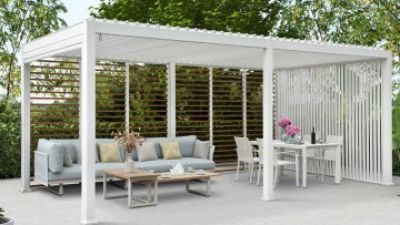
Climate goals should define the louver system, not appearance alone. The UNEP 2023 Global Status Report states that buildings consume about 30% of global final energy. In hot climates, reduce solar gain before relying on mechanical cooling. A Retractable Louver Pergola can block intense afternoon sun while allowing morning daylight. East and west façades need stronger glare control than north-facing areas.

In humid regions, prioritize airflow, drainage, and corrosion-resistant finishes. Leave the louvers slightly open during mild rain when ventilation matters.

For cold climates, capture low winter sunlight and limit unnecessary shading. The International Energy Agency reports that global space-cooling demand could more than triple by 2050 without efficiency improvements. That projection makes seasonal control important, although it should not replace proper insulation or ventilation design.

Tips: Define the main goal for each season. Use adjustable angles near west-facing seating areas. Check local wind exposure before selecting large spans. ASHRAE Standard 55 can guide thermal comfort checks, but real comfort varies with clothing, humidity, and activity. Windy coastal sites may need tighter engineering review. Perfect settings rarely exist. Test a small zone first, record glare and temperature, then revise the specification.

Compare Louver Styles, Materials, and Light-Control Features

7 Louver Shading Tips for Global Buyers

Compare Louver Styles, Materials, and Light-Control Features

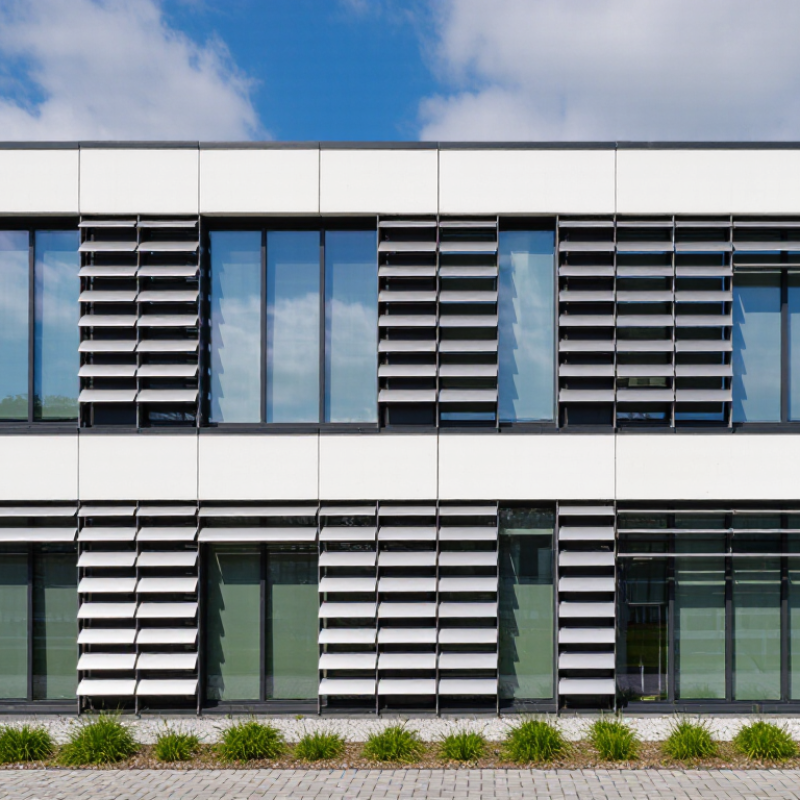
Global buyers should compare performance, not just appearance. Fixed louvers offer simple, low-maintenance shading, while adjustable blades respond better to changing sun angles. Horizontal louvers suit high-angle sunlight, and vertical louvers help manage low morning or afternoon glare. Deep blades block more radiation but may reduce daylight. That trade-off matters.

Material choice changes durability and comfort. Powder-coated aluminum is light, corrosion-resistant, and suitable for many climates. Timber adds warmth, but it needs careful moisture protection. PVC can reduce cost, though heat exposure may cause aging.

A 2023 IEA buildings report states that buildings use about 30% of global final energy. Better solar control can reduce cooling demand, but louvers alone cannot fix poor glazing or insulation. That is an uncomfortable detail.

Specify blade depth, spacing, surface reflectance, and tilt range together. Bright interior finishes can redirect useful daylight; dark finishes absorb more heat. Manual adjustment works for small buildings, while motors, sun sensors, and timers improve consistency in larger projects.

The U.S. Department of Energy’s daylighting guidance supports combining shading with electric-light controls. Test the system at different times, not only at noon.

Also check wind loads, cleaning access, and replacement parts. A perfect visual sample can still fail on a coastal façade. I would request climate-specific simulations and a physical mock-up before approving quantities.

Measure Windows and Verify Installation Requirements

Before ordering louver shading, measure every window, not just one sample. Record width and height at the top, middle, and bottom. Older buildings often have uneven openings. Use the smallest measurement when the system fits inside the reveal. Note the reveal depth, sill angle, nearby handles, screens, and ventilation units. A few millimeters can affect clearance.

Check whether the shading will be mounted inside, outside, or across the façade. Each position changes light control, drainage, and fixing access. Photograph corners and wall surfaces for the installer. Brick, concrete, timber, and insulated cladding need different anchors. Do not assume the existing frame can carry additional weight. Ask a qualified professional to inspect it.

Measure twice. Mark obstructions clearly.

For an Aluminum Louver Pergola, measure the post positions, roof span, drainage direction, and overhead clearance. Confirm that doors can open fully beneath the structure. Review local wind, snow, fire, and planning requirements before fabrication. Coastal locations may require more careful material and fastener selection. Also verify electrical routes, control locations, and safe access for maintenance. A drawing can look accurate while hiding a low beam or sloping floor. I have found that the most expensive errors often begin with rushed notes, not difficult installation work. Recheck every dimension after temporary scaffolding or exterior repairs are removed. Leave realistic service space around moving louvers. Technician access matters.

Match Louver Design with Local Building Standards

For global buyers, louver shading should begin with local building standards, not a catalog image. A façade that works in a dry coastal city may fail under snow, typhoons, or strict fire rules. Ask a qualified local engineer to verify wind pressure, structural anchoring, fire classification, thermal performance, and emergency access. This step sounds routine. It prevents expensive redesigns. Standards can change between neighboring regions, even within one country.

Match blade angle and spacing with local daylight and energy requirements. A deep horizontal louver can reduce high summer sun, while vertical blades suit low morning or evening glare. Check local limits for projection, pedestrian clearance, drainage, and cleaning access. In snowy areas, allow space for ice and snow loads. Near the coast, specify corrosion-resistant materials and confirm the required coating test. Do not rely on a generic wind chart. Real exposure depends on height, corners, and nearby buildings.

Request drawings, material data, load calculations, test reports, and installation instructions in the project language. Compare these documents with the authority having jurisdiction before placing a large order. Mock-up testing can reveal glare, vibration, water runoff, or maintenance problems that renderings hide. I have seen attractive layouts create harsh indoor shadows. That mistake deserves a rethink. Test it locally. Leave adjustment options where local conditions remain uncertain. A compliant louver is not automatically a comfortable one.

Evaluate Wind, Rain, Heat, and Corrosion Resistance

7 Louver Shading Tips for Global Buyers
A Louver Gazebo must suit its climate, not only its appearance.
Tip 1
Check local wind speeds against ASCE 7-22 design maps. Coastal and typhoon zones need stronger frames, anchors, and connection details.
Tip 2
Ask for water-penetration evidence, such as ASTM E331 testing. Small roof gaps can create large problems during wind-driven rain.
Tip 3
Inspect the drainage path. Gutters, concealed channels, and sloped louvers should move water away from furniture and flooring.
Tip 4
Evaluate solar heat control by louver angle, spacing, and roof orientation. The U.S. Department of Energy links solar exposure with cooling demand, but product results vary by site.
Tip 5
Review corrosion protection through coating thickness, pretreatment, and ISO 12944 corrosivity categories. Salt-air locations deserve stricter specifications.
Tip 6
Treat ASTM B117 salt-spray hours carefully. This test compares coatings, but it does not perfectly reproduce outdoor weather.
Tip 7
Confirm moving-part performance after repeated opening cycles. A beautiful system can still fail at its hinges.
The World Meteorological Organization reported 2023 as the warmest year recorded, with more disruptive weather risks. That statistic should influence site assessment. Still, climate data cannot replace engineering review. I would request structural calculations, drainage drawings, and maintenance instructions before buying. Ask awkward questions. They often reveal hidden assumptions.

Check Automation, Maintenance, Warranty, and Spare Parts

7 Louver Shading Tips for Global Buyers

Check the automation before approving the louver system. Ask for manual override access, sensor accuracy, control compatibility, and power-loss behavior. A quiet motor matters in offices, hotels, and homes. Request a live test with wind and sunlight sensors. Do not trust a polished video alone. Confirm installation records from similar climates and building types.

Maintenance planning should begin before shipment. Inspect hinges, seals, wiring, and drainage paths at scheduled intervals. Coastal projects need stronger corrosion checks because salt settles inside small joints. Keep a written service log with dates, faults, and replaced components. I once saw a minor alignment issue become costly because nobody recorded the first warning. That mistake still deserves attention. Ask for cleaning instructions and safe access requirements.

Read the warranty line by line. Check coverage periods, labor limits, weather exclusions, and response times. Confirm whether remote diagnosis is included. Spare parts need equal scrutiny. Request a parts list, compatibility codes, storage guidance, and realistic delivery estimates. Keep motors, connectors, and control modules in dry storage when possible. Ask whether discontinued parts have approved alternatives. A factory acceptance test can reveal poor movement before containers leave the port. Still, testing does not replace local inspection after installation. Feedback from installers is valuable, even when it exposes gaps in your original specification.

7 Louver Shading Tips for Global Buyers - Check Automation, Maintenance, Warranty, and Spare Parts

Tip Key Dimension What to Check Practical Benchmark or Requirement Buyer Action
1 Blade and frame suitability Confirm blade material, coating, drainage, wind exposure, and corrosion conditions at the installation site. For coastal or high-humidity areas, specify corrosion-resistant materials and finishes suitable for the local environment. Wind-load design should be calculated for the project location rather than assumed from a generic rating. Provide site location, opening dimensions, wind data, orientation, and required shading or ventilation performance before quotation.
2 Automation and control compatibility Check actuator voltage, control signal, travel limits, manual override, sensor inputs, and integration with the building management system. The control system should clearly state operating voltage, current demand, protection level, communication protocol, and fail-safe position. Common building-control interfaces may include dry contact, 0–10 V, or digital bus control. Request wiring diagrams, control logic, commissioning procedures, and a sample operating sequence for normal, emergency, and power-loss conditions.
3 Performance and safety testing Verify air movement, daylight control, water management, wind resistance, noise, and safe movement of motorized parts. Ask for test methods and acceptance criteria instead of relying only on marketing descriptions. Electrical products should be assessed against applicable local electrical and machinery-safety requirements. Include documented factory testing, site acceptance testing, obstruction protection, emergency stop requirements, and safe-access provisions in the purchase specification.
4 Routine maintenance Review cleaning frequency, inspection points, lubrication requirements, actuator access, and procedures for removing dust, salt, or debris. Maintenance intervals depend on exposure and operating cycles. A practical plan normally includes visual inspection, cleaning, fastener checks, wiring inspection, and functional testing at scheduled intervals. Obtain an operation and maintenance manual with checklists, recommended tools, isolation procedures, and estimated labor time for each service task.
5 Warranty scope and exclusions Separate coverage for frames, blades, finishes, motors, controls, installation workmanship, and replacement labor. Warranty duration and conditions vary by contract and jurisdiction. Coverage may exclude incorrect installation, unauthorized modifications, poor maintenance, abnormal voltage, severe weather, or normal finish wear. Request the written warranty before ordering and confirm start date, claim documents, response time, shipping responsibility, remedies, and whether labor is included.
6 Spare-parts availability Identify replaceable motors, gearboxes, brackets, bearings, control boards, sensors, seals, fasteners, and remote controls. Parts should have clear reference numbers and compatibility information. Long-life projects should plan for component availability beyond the initial warranty period. Ask for a recommended spare-parts list, current pricing, lead times, storage conditions, replacement instructions, and a policy for discontinued components.
7 International delivery and after-sales support Confirm packaging, documentation, installation responsibility, customs requirements, remote support, training, and local service capability. Export shipments should include itemized packing information, installation drawings, electrical documentation, maintenance instructions, and applicable conformity documents for the destination market. Define Incoterms, delivery milestones, inspection procedures, spare-parts shipment method, technical-support contacts, and escalation times in the contract.

Note: Final specifications, safety requirements, warranty terms, and maintenance intervals should be confirmed against the project design, local regulations, installation conditions, and the signed supply contract.

Select a Reliable Supplier and Confirm Delivery Terms

A dependable supplier matters more than a low initial quote when buying a Pergola Louver Roof internationally. In project reviews, I check production records, material certificates, load calculations, and recent export references. The World Bank’s Logistics Performance Index 2023 shows wide differences in customs efficiency and shipment reliability between markets. Ask the supplier where delays usually occur. A vague answer is a warning.

Confirm delivery terms before approving drawings. Specify the Incoterm, named destination, insurance responsibility, unloading method, and risk-transfer point. “Port delivery” is not precise enough. The UNCTAD Review of Maritime Transport reports that over 80% of global merchandise trade by volume moves by sea. Therefore, a missed vessel can affect installation schedules, labor bookings, and storage costs. Request a production timeline with approval, fabrication, inspection, packing, and dispatch dates. Add buffer time.

Inspect packaging details, too. Aluminum blades should be separated with protective material, while motors need sealed, labeled cartons. Require photos before loading and agree on documents, including the commercial invoice, packing list, certificate of origin, and inspection report. Payment milestones should connect to measurable events, not promises. I once underestimated local unloading restrictions; the delay was avoidable. No checklist catches every problem. Still, written terms reduce arguments when weather, customs, or revised drawings change the schedule.

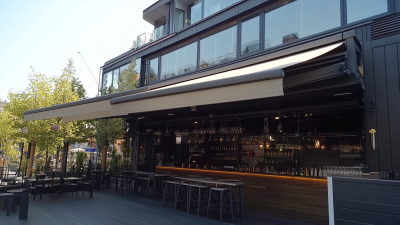
Outdoor Waterproof Aluminum Bioclimatic Louver Pergolas for Garden Cafés and Restaurants

Outdoor waterproof aluminum bioclimatic louver pergolas create a refined and practical extension for garden cafés and restaurants. Built with durable aluminum frames and adjustable louvers, they provide flexible shade and reliable protection from changing weather conditions. The structure can be customized with a sleek tempered glass door, creating an independent outdoor room where guests can dine, relax, and enjoy a quieter atmosphere away from surrounding disturbances.

For additional comfort and privacy, motorized side screens or a privacy slat wall can be installed according to the venue’s needs. Wpc Decking offers an attractive, low-maintenance flooring solution that withstands frequent use and outdoor exposure. During hot summer days, integrated fans and air conditioning help maintain a cool environment beneath the pergola. In colder seasons, an electric heater can provide welcome warmth, allowing guests to gather comfortably around a fire pit.

This versatile outdoor structure enhances the visual appeal of cafés and restaurants while supporting year-round operation. As an experienced China supplier and manufacturing factory, we carefully monitor materials, assembly, and performance to deliver dependable quality. Each pergola is designed to transform an ordinary Outdoor Area into an elegant, comfortable space for dining, socializing, and relaxation.

FAQS

How should louver shading goals change with climate?

Hot climates need strong solar control before mechanical cooling. Block intense afternoon sun. Keep useful morning daylight. Humid climates also need airflow, drainage, and corrosion-resistant finishes. Cold climates should capture low winter sunlight. Louvers alone cannot replace insulation or ventilation.

Which façade needs the strongest glare protection?

East and west façades usually need stronger control. Morning and afternoon sunlight enters at lower angles. Adjustable louvers help near west-facing seating areas. North-facing areas often need less shading. Local building direction still matters.

Should I choose fixed or adjustable louvers?

Fixed louvers are simple and require less maintenance. Adjustable blades respond better to changing sun angles. Manual adjustment suits small buildings. Motors, timers, and sensors improve consistency in larger projects. More moving parts also mean more maintenance.

How do louver shapes affect daylight and heat?

Horizontal louvers suit high-angle sunlight. Vertical louvers help reduce low morning or afternoon glare. Deeper blades block more radiation. They may also reduce daylight. A beautiful sample can still make a room too dark.

Which materials work in different environments?

Powder-coated aluminum is lightweight and suits many climates. It also resists corrosion when properly finished. Timber adds warmth but needs moisture protection. PVC may cost less, yet heat exposure can cause aging. Coastal sites deserve extra review.

What specifications should buyers compare?

Compare blade depth, spacing, reflectance, and tilt range together. Bright surfaces can redirect useful daylight. Dark surfaces absorb more heat. Check cleaning access and replacement parts. Appearance is not enough.

How can I test comfort before ordering?

Test a small zone at different times. Record glare, temperature, and daylight levels. Do not test only at noon. Include changing clothing, humidity, and activity. Perfect settings rarely exist. Revise the specification after testing.

What should I confirm with an international supplier?

Review production records, material certificates, load calculations, and recent export experience. Ask where delays usually occur. Vague answers are a warning. Confirm the delivery term, destination, insurance, unloading method, and risk-transfer point. “Port delivery” is too vague.

Which shipping and inspection details matter most?

Request dates for approval, fabrication, inspection, packing, and dispatch. Add schedule buffer. Separate metal blades with protective material. Seal and label motor cartons. Request loading photos and shipping documents. Link payments to measurable milestones. I once underestimated unloading restrictions. The delay was avoidable.

Conclusion

Choosing the right Louver Shading system requires more than comparing appearance and price. Global buyers should first define their goals according to the local climate, such as reducing heat, controlling glare, improving ventilation, or protecting indoor spaces from rain. Compare louver styles, materials, blade angles, and light-control features, then measure windows accurately and confirm mounting conditions, structural support, and access requirements. The design should also meet applicable local building standards and safety expectations.

Before ordering, evaluate resistance to wind, heavy rain, heat, humidity, and corrosion, especially for coastal or extreme-weather locations. Buyers should review automation options, maintenance procedures, warranty coverage, replacement parts, and long-term service support. A reliable supplier should provide clear technical documents, quality controls, production timelines, packaging details, and delivery terms. By checking these factors in advance, purchasers can select Louver Shading that offers effective performance, easier installation, dependable durability, and better value across different markets.
Amelia

Amelia

Amelia is a dedicated professional at Foshan Charmor New Materials Co., Ltd., where she excels as a skilled marketing specialist. With a profound understanding of the company's innovative product line, Amelia consistently demonstrates her expertise in the field of new materials. Her role involves......
Previous 7 Best Outdoor Construction Materials for Global Buyers