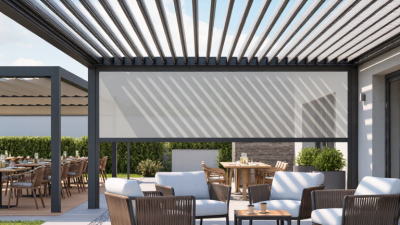
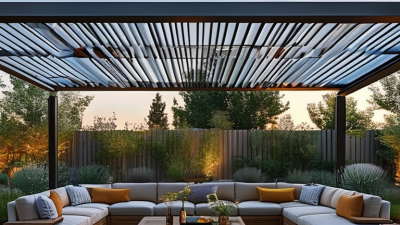
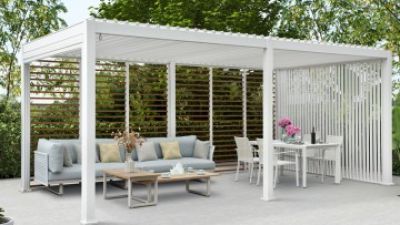
Picking the right Aluminum Louvered Pergola in 2026 isn’t just about flipping through photos and checking prices. You gotta dig a bit deeper—look at the structure, how the controls work, drainage, the quality of the finish, and whether support for installation is solid. I mean, a pergola might look super sleek and stylish online, but then you get outside and it feels kinda shaky when the wind picks up on an exposed patio. That’s actually pretty important—don’t overlook it.
This guide walks you through some of the main types of pergolas for both homes and businesses. We’re talking motorized roofs, manual systems, freestanding options, attached models, and even those cool movable outdoor rooms. Each one fits different spaces and budgets. So, make sure to measure your patio carefully—check beam sizes, where to place the posts, and how water’s gonna drain. Skipping these details can lead to costly headaches during installation.
Materials also matter a lot. Powder-coated aluminum is usually a good choice—it balances weight, resists rust, and doesn’t need tons of upkeep. But keep in mind, coating thickness and how they prep the metal can vary between brands. Don’t be shy—ask for the tech specs, load ratings, warranty details, and installation guides. A legit seller will be upfront and clear. If they’re vague or dodging your questions, that’s a red flag.
Now, about those smart controls—sure, they can make things more comfortable, but they’re not automatically better. Features like sensors, remote controls, and lighting systems need to have reliable connections and easy manual options. It’s pretty frustrating when a fancy roof control system stops working during a heavy rainstorm—that’s the kind of thing you might overlook until it’s too late.
There’s no one-size-fits-all perfecT Pergola. Every project is different, and your priorities will vary. If you live near the coast, you’ll need different protections than if you’re running a restaurant downtown. Even pros can miss some local quirks—so be honest about drainage, seasonal weather, sun angles, and future maintenance needs. The best choice isn’t necessarily the most expensive one; it’s the one that best suits your site, how you plan to use it, and the actual conditions you’re dealing with.
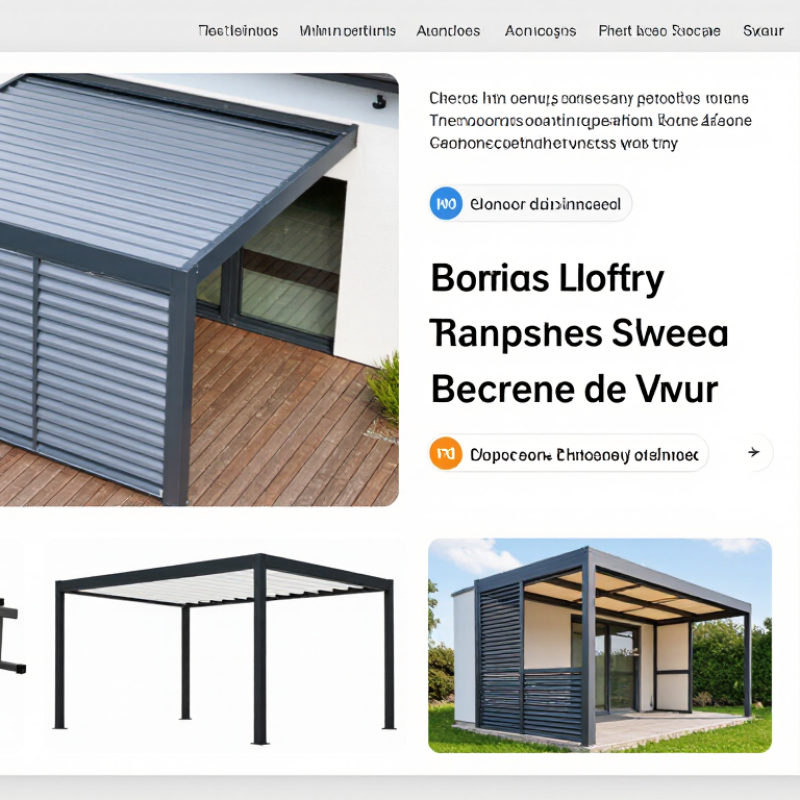
Aluminum louvered pergolas in 2026 are easier to compare when buyers separate three design decisions: roof, drive, and installation. These categories affect shade, weather response, maintenance, and project risk. Do not judge a frame by appearance alone.
Roof types usually include adjustable louvers, fixed panels, or hybrid sections. Adjustable louvers provide flexible sunlight control and can redirect light during changing weather. Fixed panels offer simpler operation but less ventilation. Some buyers search for a Mirador Adjustable Louvered Aluminum Pergola, yet the key question remains practical: does its roof design suit the local climate and daily use? Check drainage channels, louver overlap, corrosion resistance, and verified wind performance.
Drive types include manual, motorized, and solar-assisted systems. Manual controls reduce electrical work, while motorized drives improve convenience for larger roofs. Ask about emergency operation, noise, wiring access, and replacement parts. Small details matter. A quiet motor is useful beside a bedroom, but a complicated control system may frustrate users.
Installation types are generally freestanding, wall-attached, or modular. Freestanding units need stable foundations and careful alignment. Attached units require a suitable wall structure and reliable flashing. Modular designs can simplify expansion, though extra joints may increase maintenance points. On real installations, anchoring is often underestimated. Measure the surface, drainage path, and service clearance before ordering. A minor planning mistake can become an expensive adjustment.
2026 Top Aluminum Louvered Pergola Types for Buyers
Fixed louvers offer the lowest control cost. Their blades stay closed or open permanently. This suits buyers who want stable shade with minimal maintenance. They also block less winter sunlight. Manual louvers add a crank or lever. They cost more, but users can adjust airflow without electricity. Motorized louvers provide the most precise control. Remote operation helps when rain arrives suddenly. However, motors, sensors, wiring, and installation raise the budget.
The U.S. Department of Energy reports that exterior shading can reduce solar heat gain by up to 65% on south-facing windows and 77% on west-facing windows. A pergola is not a window awning, so expect different results. Orientation, blade spacing, and local climate matter. That distinction is easy to miss. The 2025 RSMeans Construction Cost Data also shows how regional labor and material prices can change installed costs significantly. Fixed systems usually need fewer service visits. Motorized systems may repay their cost through comfort, but energy savings are not guaranteed.
Tips: Ask for separate prices for the frame, louvers, motor, wiring, drainage, and installation. Compare manual operation during a power outage. Check the controller’s weather rating. Choose corrosion-resistant aluminum near coastal areas. Request wind-load documentation, not vague marketing claims. A cheaper quote may exclude foundations or electrical work. Review those omissions carefully. Balancing comfort and cost requires honest site measurement, and buyers should expect some uncertainty.
For 2026 buyers, an Adjustable Louvered Aluminum Pergola should be judged beyond its appearance. The frame alloy affects stiffness, weight, and long-term maintenance. 6063-T5 aluminum is widely used because it offers good formability, clean surfaces, and practical strength for residential structures. However, it is not the strongest aluminum temper available. Large spans need proper profiles, reinforced joints, and verified load calculations.
In coastal inspections, I have seen tiny drainage failures create white oxidation around fasteners. Salt air can also accelerate galvanic corrosion when incompatible metals touch. A durable finish helps, but coating damage still needs prompt attention. Look for sealed joints, stainless or compatible hardware, and clear information about surface preparation. A thick frame alone does not guarantee stability. I once trusted a heavy-looking structure that used weak corner connections. It needed correction.
Tips: Ask for the alloy and temper in writing. Check wall thickness, beam span, and wind-load data. Inspect cut edges and drainage paths before installation. Wash exposed surfaces with fresh water periodically, especially near the sea. Avoid abrasive cleaners. No finish is maintenance-free. Also, confirm whether replacement louvers and hardware remain available after several years. A thoughtful buyer should question vague claims, because corrosion resistance depends on design, workmanship, environment, and maintenance together.
In 2026, buyers should evaluate an Aluminum Pergola With Louvered Roof by movement, not appearance alone. Adjustable louvers commonly rotate from 0° to 135°. At 0°, closed blades create shade and limit direct rainfall. Around 90°, they admit daylight and cross-ventilation. Near 135°, they expose more sky, but wind-driven rain can enter. A 135° opening is not automatically better.
Rainwater management depends on more than blade angle. Look for concealed gutters, sloped channels, sealed joints, and downspouts sized for local rainfall. NOAA Atlas 14 provides precipitation-frequency data for 5-, 10-, 25-, 50-, and 100-year events. These values change significantly between regions. ASCE 7-22 also treats rain loads as site-specific design considerations. Ask for the drainage calculation, not only a product brochure. Watch the water during a real shower. Small leaks often appear at corners first.
During a site inspection, rotate the louvers slowly and listen for uneven motor strain. Leaves may collect inside narrow gutter channels. That detail is easy to miss. I would also check whether the outlet can discharge away from doors, paving, and foundations. Local installers may recommend larger drainage capacity after reviewing roof area and storm intensity. Their advice matters, but it still deserves verification. The ideal adjustment range can fail when maintenance access is poor.
Evaluate adjustable louvers by 0–135° rotation and rainwater management.
Adjustable aluminum pergolas commonly use louvers that rotate from a closed position toward approximately 90° or 135°, depending on the mechanism. The rainwater-control score counts typical integrated features: perimeter gutters, concealed downspouts, and a sealed closed-louver configuration. Product specifications and drainage performance should be confirmed with the supplier.
In 2026, aluminum louvered Pergola Selection should begin with the site, not appearance. ASCE 7 wind-load criteria consider basic wind speed, exposure category, risk category, and building height. Local adoption matters too. A jurisdiction may still enforce an older edition.
A coastal home may need reinforced connections and corrosion-resistant fasteners. Inland projects face different concerns. Open terrain can increase wind pressure, while nearby buildings may create turbulent gusts. Adjustable louvers also change behavior when closed. That detail is easy to overlook. Mirador Adjustable Louvered Aluminum Pergolas should be evaluated as a complete system, including posts, beams, louvers, anchors, and foundations. A catalog wind rating alone is not enough.
Snow regions require checks for balanced snow, drifting, and freeze-thaw movement. Heavy rain favors louvers with controlled drainage and properly sloped gutters. Hot climates need attention to thermal expansion, glare, and seal durability. Freestanding pergolas usually demand deeper or stronger foundations than attached structures. Field installers should verify substrate conditions before drilling. A small crack in concrete can alter the anchoring plan. Licensed structural professionals should review project-specific calculations, especially in high-wind or high-risk areas. Some early assumptions may prove wrong. Rechecking them is worthwhile.
AAMA 2603–2605 helps buyers judge coating durability, but it does not certify drainage. AAMA 2603 covers basic organic coatings. AAMA 2604 requires stronger performance, including five-year South Florida exposure testing. AAMA 2605 raises the benchmark to ten years of South Florida exposure. These periods are useful data points, not lifetime promises. Color change and chalking can still appear earlier in coastal, dusty, or high-UV locations.
Look underneath the louvers. A well-designed pergola should guide rain into concealed gutters, then through downspouts with clean outlet paths. Ask for drawings showing slope, drain locations, and overflow control. During inspection, pour water across several closed louvers. Watch the corners, posts, and gutter joints. A coating certificate cannot fix poor drainage. I would not trust a showroom sample alone; it rarely shows years of trapped moisture and debris. The American Architectural Manufacturers Association, now operating through FGIA, treats AAMA 2603–2605 as coating-performance specifications, not structural or water-management approvals.
Tips: Request the exact AAMA class, test evidence, and coating thickness. Check whether fasteners match the aluminum system. Inspect cut edges for exposed metal. Ask how installers clean blocked gutters. A five-minute hose test may reveal more than polished sales language. Also compare local wind, rain, and salt exposure with the selected coating class.
For 2026, buyers are comparing more than color, size, and price. Aluminum louvered pergolas usually include fixed-roof, manually adjustable, and motorized bioclimatic types. Each type needs a different inspection. Look for an IP rating on motors, controls, and junction boxes. IP65 protects against dust and water jets, but it does not mean submersion. IP44 handles splashing, yet it may be unsuitable for exposed coastal locations. Ask for test documentation, not only a printed number.
Sensors can make a pergola more responsive and safer during changing weather. Rain sensors may close the louvers when drops reach the control surface. Wind sensors can trigger opening, reducing pressure on the roof system. Sun sensors support shade control during bright afternoon hours. Still, automation can misread local conditions. A nearby wall, tree, or dusty sensor may affect its response. Manual override remains essential.
Practical buyers should check drainage paths, emergency controls, maintenance access, and replacement parts. A quiet motor is useful, but dependable operation matters more. Coastal users should examine coating quality and fastener corrosion resistance. Families may prefer child-safe controls and simple remote access. Energy-conscious owners should ask how louvers reduce heat before purchasing additional equipment. I would also allow a little skepticism. Smart features sound impressive, but poorly calibrated sensors can create inconvenience instead of comfort.
| Pergola Type | Best Use | Louver Operation | Recommended IP Rating | Useful Sensors | Key 2026 Buying Considerations |
|---|---|---|---|---|---|
| Manual Adjustable-Louver Pergola | Patios, balconies, and smaller residential areas where simple operation is preferred. | Hand crank or manual gear mechanism; no electrical connection required. | IP44 or higher for protected outdoor components; confirm the actual rating of any accessories. | Usually none; an optional rain indicator can provide a warning. | Check operating force, corrosion-resistant fasteners, drainage paths, and access for seasonal cleaning. |
| Motorized Bioclimatic Pergola | Daily outdoor living, dining, and flexible shade control in changing weather. | Electric actuator controlled by wall switch, remote, app, or building-automation interface. | IP55 is a practical target for exposed motor and control enclosures; verify certification. | Rain, wind, temperature, sunlight, and position sensors. | Look for manual override, obstacle protection, replaceable actuators, quiet operation, and app privacy controls. |
| Freestanding Aluminum Pergola | Gardens, pool areas, restaurants, and locations away from an existing wall. | Manual or motorized, depending on the selected roof and control package. | IP55 for outdoor control equipment; IP65 may be appropriate for highly exposed enclosures. | Wind, rain, frost or temperature, and sun sensors; optional occupancy sensor. | Verify foundation design, anchoring, local wind requirements, drainage discharge, and electrical routing. |
| Wall-Mounted Pergola | Terraces and patios that can use a structurally suitable building wall for support. | Manual or motorized louvers with a rear ledger or wall connection. | IP44–IP55, depending on whether the motor and controls are sheltered or fully exposed. | Rain and wind sensors; optional solar sensor for automatic shading. | Assess wall load capacity, flashing, waterproofing, thermal movement, and compatibility with doors and windows. |
| Integrated Lighting Pergola | Evening dining, hospitality spaces, and outdoor areas requiring ambient or task lighting. | Motorized louvers with integrated LED channels or separately mounted fixtures. | IP65 is a sensible target for exposed lighting housings; use only products with documented ratings. | Dusk, occupancy, rain, wind, and temperature sensors. | Check LED heat management, replaceability, dimming compatibility, cable protection, and independent lighting controls. |
| High-Wind-Oriented Pergola | Coastal, exposed, or elevated sites with demanding environmental conditions. | Motorized opening and storm-position control, subject to the engineer’s design limits. | IP55–IP66 for exposed controls, with the rating matched to the enclosure location. | Calibrated wind sensor, rain sensor, temperature sensor, and emergency stop or limit monitoring. | Do not rely on a generic wind rating; require site-specific structural calculations, anchoring details, and an automatic safe position. |
| Rain-Management Pergola | Users who want occasional rain protection while retaining ventilation and daylight. | Motorized interlocking louvers designed to direct water toward perimeter gutters. | IP55 for exposed motor assemblies; IP65 for suitably sealed control boxes. | Rain, wind, louver-position, and water-level or drainage-monitoring sensors where available. | Confirm gutter capacity, downspout locations, overflow routes, cleaning access, and the manufacturer’s definition of water resistance. |
| Smart-Home-Connected Pergola | Homes or commercial spaces requiring scheduled, remote, or integrated environmental control. | Motorized louvers connected through a dedicated controller, wired protocol, or approved wireless gateway. | IP55 or better for exposed equipment; the IP code does not measure cybersecurity or wireless reliability. | Rain, wind, sunlight, temperature, occupancy, and energy-use sensors. | Prioritize local control, offline operation, software-update policy, data handling, API compatibility, and manual override. |
Outdoor Waterproof Aluminum Bioclimatic Louver Pergolas: A Smart Sunshade Solution for Gardens, Cafés, and Restaurants
Designed for modern outdoor living, waterproof aluminum bioclimatic louver pergolas provide flexible shade and weather protection for gardens, cafés, and restaurants. Their adjustable louvers help control sunlight and ventilation, while the durable aluminum structure delivers a sleek appearance and reliable outdoor performance. A tempered glass door adds a refined touch and supports privacy, especially when combined with motorized side screens or a decorative privacy slat wall. Comfortable outdoor furniture can transform the covered area into an inviting place for dining, relaxing, and socializing.
WPC decking offers an attractive, low-maintenance flooring solution that suits busy commercial environments and is widely favored by suppliers and factories in China. The pergola can be equipped with fans and air-conditioning units to maintain a pleasant atmosphere during hot summer days, while electric heaters provide warmth in colder seasons. A fire pit can further enhance the cozy setting for guests. With careful quality control before delivery, this type of pergola combines practical functionality, contemporary design, and adaptable comfort for year-round outdoor use.
Many adjustable louvers rotate from 0° to 135°. At 0°, closed blades provide shade and limit direct rainfall. Around 90°, daylight and cross-ventilation enter. Near 135°, more sky becomes visible, but wind-driven rain may enter. Wider is not always better.
Look for concealed gutters, sloped channels, sealed joints, and properly sized downspouts. Ask for drainage calculations based on local rainfall. Do not rely on a brochure alone. Watch the roof during a real shower. Small leaks often appear at corners.
Rotate the louvers slowly and listen for uneven motor strain. Leaves can collect inside narrow gutter channels. Check whether maintenance access is practical. An excellent design can still become troublesome when cleaning is difficult.
An IP65 rating generally protects equipment from dust and water jets. It does not permit submersion. IP44 handles splashing, but exposed coastal areas may require stronger protection. Request test documents. Printed numbers deserve verification.
Rain sensors can close the louvers when moisture reaches the sensor. Wind sensors may open the roof and reduce pressure. Sun sensors can support afternoon shade control. However, walls, trees, and dust can distort readings. Manual override remains essential.
Water should discharge away from doors, paving, and foundations. Poor outlet placement can create slippery surfaces and unwanted pooling. A local installer may recommend larger drainage capacity. That advice is useful, but check the reasoning.
Fixed-roof, manually adjustable, and motorized systems require different inspections. Manual systems need smooth movement and secure locking. Motorized systems need reliable controls, protected wiring, and replacement parts. Smart features are not automatically dependable.
Coastal buyers should examine coating quality and fastener corrosion resistance. Families may prefer child-safe controls and simple remote access. Energy-conscious owners should ask how the louvers reduce heat. A quiet motor is helpful, but dependable operation matters more. No system is perfect.
Choosing an Aluminum Louvered Pergola in 2026 requires more than comparing appearance and price. Buyers should first identify the roof, drive, and installation type, then compare fixed, manual, and motorized louvers according to control convenience, maintenance, and total cost. A 6063-T5 aluminum frame can provide a practical balance of strength, light weight, and corrosion resistance, while adjustable louvers with approximately 0–135° rotation help regulate sunlight, airflow, and rainwater direction.
Performance should also match local conditions. Wind-load planning based on ASCE 7 criteria, regional climate, and proper anchoring can improve structural reliability. Integrated drainage channels, durable finishes, and coating performance evaluated through AAMA 2603–2605 provide useful indicators of long-term protection. For advanced installations, smart systems should be assessed through IP ratings, rain and wind sensors, remote controls, safety features, and compatibility with changing 2026 buyer expectations. A well-matched pergola combines dependable engineering, efficient water management, comfortable operation, and suitable installation planning.